Open today: 15:00 - 19:00
1 / 0
Dexter
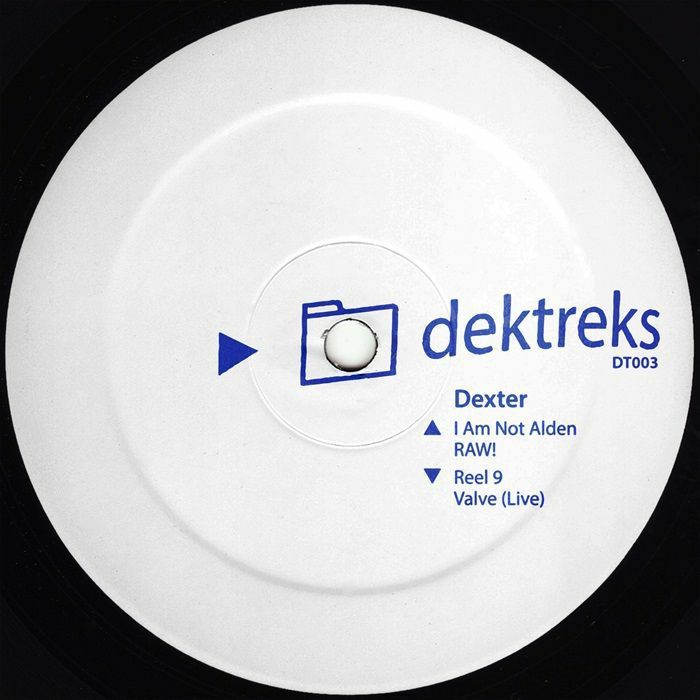
Raw! (remastered) EP
Artists
Labels
Catno
DT003
Formats
1x Vinyl 12"
Country
Release date
Genres
Styles
More classic and sought after Dexter business in the rebound! Originally released in 2004, this Dutch Electro grail repress was long overdue. Remastered by the man himself. You know the drill!
Available Tomorrow
Mar 20, 2026
16€*
*Taxes included, shipping price excluded
PRE ORDER ITEM, ignore Available date, record will arrive shortly after its release
A1
I Am Not Alden
A2
Raw
B1
Reel 9
B2
Valve (live)
Other items you may like:
The Electro boss from Schagen returns with yet another classic in the rebound. After 'I Don't Care' Dexter presents 'Intruder' from 2001 in a remastered form.
Finnish-born, New York raised, and now Melbourne based Jani Ho has crafted a distinctive sound that can only be described as machine music with undeniable soul! Jani's hardware-driven live performances and studio productions are legendary and has earned him global recognition with multiple quality releases on the highly acclaimed soiree records. His contribution for the dolly TS series draws those direct lines with Detroit's soulful machinery techno and echo's the perfect union of rhythm and emotional depth, touching the deepest territories of techno.
System Error is thrilled to welcome the inimitable Ildec. Four cuts of tough, signature sounds from this seriously talented producer. Proper dancefloor pressure. Vinyl only.
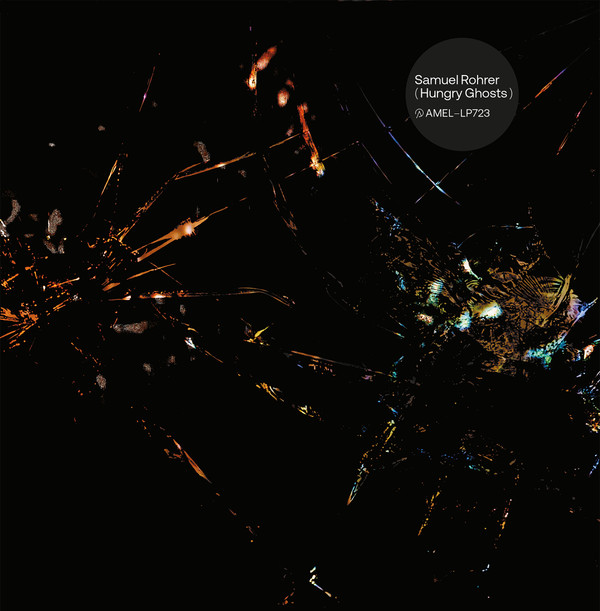
With his Arjunamusic label and a growing catalog of category-defying releases, Samuel Rohrercontinues to quietly, yet confidently, make a name for himself as a genuinely unique figure withinthe European electronic music realm. Over the past decade he has assembled a repertoire ofmusic that fills a sadly neglected gap in the modern musical landscape. That is to say, he hasmade a number of “electronically”-aided works that never seem to make “electronic-ism” the mainselling point or raison d'être. Rohrer understands that we inhabit a networked media landscapethat no longer sees a novelty value in every synthetic or technological sound, and by realizingthis, he makes a music that fully engages with the present without completely disregarding theexciting speculative sensibility that has allowed electronic music to solidify into a tradition. Hislatest solo album, Hungry Ghosts, again shows the high quality of sonic design that can beachieved by conceptualizing musical passages as living, breathing entities rather than assignposts to some still distant reality.Maybe more so than any of Rohrer’s solo records to date, Hungry Ghosts is the one thatmost unambiguously displays the artist as a kind of inspired sound “cultivator” or landscaperrather than just a straightforward “producer”. The emphasis here seems to be biological growthprocesses rendered in musical form, and in fact some track titles namechecking the biodiversityof the external world (“Slow Fox”, “Ctenophora”) and neurochemistry (“Serotonin”) lend someadditional credence to this interpretation.As with previous outings, Rohrer starts with his skills as a genre-resistant percussionistand builds from there, with dense clusters of drum hits and icy cymbal exclamations leading theway into a wide-open atmosphere full of fragmented phrases, marked with strange reversals orcompressions of time. The percussive portions and other ambiences merge together in such away that the latter seems like a kind of shifting, holographic camouflage for the former; an effectwhich makes for a greater than usual number of shifts in mood. Rohrer’s already establishedambiguity and mystery are the moods that permeate throughout, to be sure, but there are alsosurprising moments of humorous whimsy (the flourishes of cartoon mischief and teasing silenceson the tracks “Human Regression” and “Bodylanguage”), reverence (the optimistic organ swellsand steady sequencer guiding “Ceremonism”), and meditative focus (the slow-motion spectralwaltz of “Treehouse”). Also notable here are very brief etudes, such as “Window Pain,” whosedark, lush ebb and flow actually seem tailored to repeated or looped listening.It’s particularly remarkable that almost all of this material is recorded solo and in a “live /no overdubs” mode, given how much it feels like well-rehearsed ensemble playing, and given theimpeccable timing involved in continually exchanging the sounds at the very forefront of the mix.And here we come full circle to the idea of “electronic music” mentioned at the beginning here:instead of making us feel that we are in the presence of some fully-realized form brought backfrom “the future,” Rohrer invites us instead to witness fascinating processes of transition andmutation, and to value them for what they are now as much as for where they are headed.

Italomario returns with his first solo EP — the fourth electrifying release on Fuori Orario — unleashing five adrenaline-charged tracks that channel the raw energy of New Beat, Techno, and Electro.

NEOCLASH is DJ Hell's new work.The Electroclash of the early 2000s is reconstructed here, its characteristic codes extracted and reshaped into a modern, reflective form.NEOCLASH is a cultural experiment - music as a medium of reflection, a structure for space and time, and a vehicle for exploring the tensions between technology, the body, and perception.Electroclash now - or a manifesto for the aesthetic relevance of electronic club music, combining strong old-school references with a new understanding.DJ Hell, a.k.a. Helmut Josef Geier, delivers a contemporary reinterpretation of the Electroclash genre.International Deejay Gigolo Records was the pulse of the movement 25 years ago - and Hell, its very namesake. Godfather of Electroclash reloaded.25 years and many milestones later, DJ Hell returns to his roots with NEOCLASH, proving that Electroclash in 2025 can sound not nostalgic, but forward-thinking and visionary.NEOCLASH builds a bridge between past and present within electronic dance culture and club music.Italo Disco, New Wave, Indie Dance, Disco, Pop, Chicago House, Acid, Detroit Techno, and Avantgarde Music merge here into a bold new interpretation.